Wednesday, May 23, 2012

IBM Researching Urban Transportation Issues in Morocco

Here is a press release detailing on the ground research on urban transportation issues in Morocco  that is being done as we write by folks from IBM.  Being back in Morocco after a long absence, and feeling frustrated by the urban transportation issues of  the Rabat area  makes me appreciate this work.
______________
Press Release
May 21, 2012, 3:00 p.m. EDT


IBM to Research Urban Transport Issues in Morocco
Team of IBM experts arrives for three-week project funded by IBM Smarter Cities Challenge Grant 

Rabat bested 140 other cities around the world to become one of IBM's Smarter Cities Challenge winners this year. Launched in 2011, the IBM initiative is a three-year, 100-city US$50 million competitive grant program and is IBM's single-largest philanthropic initiative. 

Winning cities get the benefit of some of IBM's most talented employees who examine critical top priority urban issues such as transportation, health, housing, economic development and public safety. The IBM team then creates a comprehensive plan of creative solutions which they present to the city's leadership addressing each top priority issue. 

Rabat, as the administrative capital of Morocco, hosts all government ministries and embassy headquarters, and has a rapidly growing metropolitan population of 1.8 million people. As a result, Rabat faces increased demand for public transport. As part of the Moroccan National Urban Transport Strategy, transforming the area's transport system has become a priority to help improve the city's efficiency and demonstrate the sustainability of urban transport for the rest of the country. 

In collaboration with the Moroccan Ministry of Interior, the Municipality of Rabat, the Bouregreg Valley Development Agency, Stareo (Greater Rabat Bus transportation Management Company), The National Commission on Urban Transport (NCUT) and The Casablanca Urban Transport Planning and Management Agency, the IBM team will provide insights and recommendations on:
Governance of the urban transportation sector
Integration of the various transportation modes (Tramway / Bus / Taxi)
Implementation of a sustainable economic model for public transportation
Conducting and implementing change 

"IBM is strongly committed to helping cities improve themselves and through this initiative will provide its best talent and expertise to help the city of Rabat develop smarter solutions for urban transport," said Abdallah Rachidi, IBM Morocco Country General Manager. 

This is the third IBM team that IBM has sent to Morocco on a pro-bono basis. Earlier this year, a team from IBM's Corporate Service Corps program was involved in several other projects: 

At the Ministry of Agriculture, the IBM team helped design systems to help farmers increase revenue. This included a system that automatically disseminates market prices using phone texts and speech recognition technology. The team also provided advice on establishing international food exchanges and an irrigation advisory system that uses analytics technology. 

At the Ministry of General and Economic Affairs and the Department of Social Economy, a team of IBM employees proposed a national strategy to implement the "Badawi Souk" to increase the revenue of rural entrepreneurs. 

At the ARDI Foundation, the IBM team recommended marketing methodologies for market segmentation and product design, including tactics such as client surveys, word-of-mouth advertising, and an incentive system. 

At the Moroccan Women Network for Mentoring, the IBM team developed a two-year plan to help the organization develop a charter, training manual, blog, social networking guidelines, and web advertising strategy. 

Africa is a key priority for IBM's skilled problem-solving efforts. Since its launch in 2008, IBM's Corporate Service Corps has deployed more than 500 IBM employees on approximately 44 teams to South Africa, Tanzania, Nigeria, Ghana, Kenya, Morocco, and Egypt. All told, across 30 different countries, IBM has sent 1,500 employees and executives coming 50 countries on more than 150 team assignments throughout the world via its Corporate Service Corps. 

SOURCE IBM
Copyright (C) 2012 PR Newswire. All rights reserved


Saturday, May 12, 2012

Fez Baked Fish: A Recipe from the NYTimes

Moroccan food is newsworthy. Here is an article from the New York Times with a recipe for Fessi style baked fish. When you walk through the medina in Fez and see  kids carrying these fish on the trays back from the public oven, you  want to find a way to get invited for lunch. (Photo is taken from about.com Moroccan food website.)  BiSahha! ___________________________________________

Baked Fish, Fez Style


At lunchtime by the pool at La Mamounia, the lavish hotel in Marrakesh, the buffet is global. The grilled lobsters were tempting to be sure, but a highlight was fish boldly baked Moroccan-style, with spices, herbs, tomatoes and olives. I left Morocco a few weeks ago with the recipe ... It’s an easy all-in-one recipe that can be served at room temperature. Double or triple it and you have the anchor for a summer party menu, even on a buffet that is less copious than the one in Marrakesh. 

Baked Fish, Fez Style
Adapted from La Mamounia, Marrakesh 

Time: 1 hour
2 large cloves garlic, minced
1 tablespoon minced flat-leaf parsley leaves
1 tablespoon minced cilantro leaves
1 teaspoon ground cumin
1 teaspoon paprika, preferably hot
1 pinch saffron threads, crushed
2 tablespoons white wine vinegar
Juice of 1 lemon
1 tablespoon tomato paste
1 1/2 pounds fish fillets (4 fillets): fluke, black sea bass, hake
1 pound large Yukon gold potatoes, peeled, in 1/2-inch-thick slices
3 tablespoons extra virgin olive oil
Salt and black pepper
1 red bell pepper, cored and slivered
1 pint (1 pound) cherry tomatoes, halved
1/2 cup pitted Kalamata olives. 

1. Combine garlic, parsley, cilantro, cumin, paprika and saffron in a dish big enough for the fish. Mix vinegar, lemon juice and tomato paste in a small bowl. Add to dish and mix. Place fillets in the dish, turning to coat them, cover and set aside to marinate 2 hours at room temperature, 3 if refrigerated.
2. Place potatoes in a saucepan, add water to cover, bring to a boil, reduce heat and simmer 15 minutes. Drain.
3. Brush a baking dish that can go to the table and will hold the fish in a single layer with a little of the oil. Heat oven to 350 degrees. Spread potatoes in dish, season with salt and pepper, and place fish fillets on top. Scatter peppers and tomatoes over fish. Add a little more salt and pepper. Spoon any excess marinade over fish, strew with olives, drizzle with remaining oil and bake about 30 minutes, until fish is just cooked through.
Yield: 4 servings.


Saturday, May 5, 2012

Moroccan Tour Guides Get Training on Traditional Maghrebi Architecture

Here is a piece from AnsaMed about the training of tour guides in Morocco on Maghrebi architectural history.
___________________________

Part of Montada project for traditional Maghreb architecture

04 May, 18:03

(ANSAmed) - MADRID, MAY 4 - A training programme for young tourist guides who lead national and foreign visitors to the country's architectural heritage: this will be promoted from May 19 to 25 in Salè, Morocco, in the context of the action plan of the Montada project for the promotion of traditional architecture in the Maghreb, organised in collaboration with the Sala al Moustakbal association.

The training programme, sources active in coordinating the Montada project report, is meant to help people discover the history of buildings and architectonic sites in Salé, to develop the necessary skills to organise guided visits and to create an atmosphere that meets tourist demand. The content of the course will include: the history of Morocco, in relation to the city of Salé; language and communication and visits to monuments. The course's total duration is 20 hours. The Montada project is co-funded by the European Union with 1.5 million euros, part of the EuroMedHeritage IV programme.

Goal of the project is to make the most of the heritage of historic centres and medinas in Algeria, Morocco and Tunisia. Cities that are involved in particular are Salé, Marrakech, Dellys, Ghardaia, Sousse and Kairouan. Forums will be organised and local communities will be involved to develop a different mentality towards protecting their territory. Inhabitants will be stimulated to organise initiatives to protect their architectural heritage. (ANSAmed).

ALL RIGHTS RESERVED © Copyright ANSA

Tuesday, May 1, 2012

"A Co-Existence Lost in the Wake of Zionism:" A Photo Exhibit Documents Jewish Morocco

Here is a piece from the Canadian Jewish News about an upcoming  photo exhibit  by Aaron Elkaim that documents Jewish life in Morocco  It is entitled, "A Co-Existence: Lost in the Wake of Zionism" and will take place in Toronto.
______________________

Photo exhibit is a journey into Jewish Morocco


This image taken at the Al Zama Synagogue in Morocco
Aaron Vincent Elkaim’s upcoming photographic exhibit documents the history of Jewish Morocco.
His work will be displayed at the CONTACT Photography Festival for the month of May at the Pikto Gallery in the Distillery District in Toronto.

 “The title, A Co-Existence: Lost in the Wake of Zionism, refers to how Jews and Muslims lived alongside each other in relative peace in Morocco since, really, the beginning of Islam,” Elkaim said. “Although an Islamic country, the Jewish People were truly incorporated into the Moroccan identity and structure of the country.”

Although Elkaim said he doesn’t deny certain dark periods in the history, “on the whole, Jews were considered true Moroccans. They were part of the country’s identity, and the country was part of theirs. This is still evident in the nostalgia that exists in those who have left Morocco.”
Elkaim’s photographic project is “a journey into the remnants of a culture” that captures “an epoch of Judaism existing in peace with Islam.” Reviving memories of “a past forgotten in the wake of Zionism,” Elkaim said he aims to tell a story at odds with current perceptions of Jews and Arabs.

The Jewish People arrived in the land now known as Morocco more than 2,000 years ago. Protected since the seventh century by the Islamic principle of tolerance, they thrived, holding high positions in trade and government. The Star of David, which appeared on the currency and national flag, was a symbol all Moroccans shared.

During the Holocaust, when asked for a list of Jews, King Mohammed V declared, “We have no Jews in Morocco, only Moroccan citizens.” In 1940, Morocco had 300,000 Jews, the largest population in the Arab world. Following World War II, Israel’s expansion marked the beginning of an exodus. Today, less than 5,000 Jews remain, Elkaim said.

 “The underlying message is simply that coexistence did exist and it worked. I think this is something that is forgotten in today’s political climate, where walls are being built to keep people apart. I feel these walls are blocking the view of what once was and what could be again. I’m simply trying to find hope and truth in history, trying to keep that alive.”
Elkaim said his inspiration for his exhibit stems from his family’s history. “My father was born in the Mellah of Marrakech. He and most of my family immigrated to Canada in the 1960s. They were always very nostalgic of Morocco and kept the culture alive.”

He said the culture was always exotic, yet “normal” for him growing up. “I took it for granted. As I got older though, I began to realize that the culture could not last in the same way as the generations move forward. The Jewish traditions may stay strong, but the cultural tie to Morocco would fade.”
Before becoming a photographer, Elkaim studied cultural anthropology and film in university. He found photography as a passion after completing his degree, but it took a while for him to pursue it as a career.

 “For me the idea of exploring the world and its stories and cultures was captivating. When I began to realize that photography offered the ability to keep exploring and learning, I knew I had found something great, but more importantly, it also offered me direction and purpose for these desires. My explorations were no longer just for me – I now had the ability to communicate the things I was discovering. I could tell stories that I believe are important.”
Elkaim said he loves being part of life. “The work I do is a reflection of real life, realities that aren’t my own, but that I am privileged to experience and capture. It is the people and their stories and watching them unfold around me that truly captivate me. It’s less about a beautiful image than capturing what I am experiencing and conveying a feeling about it.”
This year marks the third time that Elkaim is showing his work at CONTACT. He is a founding member of the Boreal Collective, a group of Canadian documentary photographers who had a group show at last year’s festival.
His work from Morocco has also been shown internationally at the Reportage Festival in Australia, the New York Photo Festival, the Recconures des Arles festival in France and Fotographia Festival in Rome.

Elkaim said he hopes people will react positively to his images of Morocco. “I simply aim to shine a light on a history that might have been overlooked in the current framework surrounding both Judaism and Islam. I feel we often see things in black and white, but this story offers us shades of grey, and I believe that truth and hope usually resides somewhere in the middle.”

His favourite image from the collection is of the wind blowing through the curtains of the Al Zama Synagogue in Marrakech. “Everything is blue and so peaceful. You can just feel the presence of a sacred history being preserved within the space.”

Wednesday, April 25, 2012

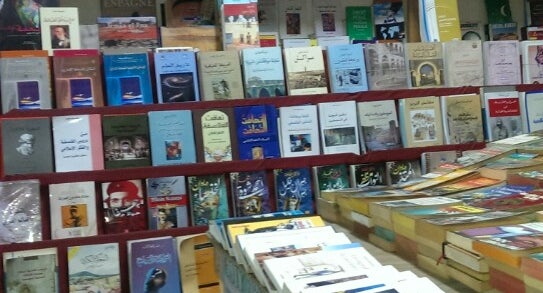
"Culture Against Triviality," The Moroccan Campaign to Promote Reading

Here is an article from al-Ahram about an event  called "Culture Against Triviality" that took place recently in Morocco to promote reading in the country.
___________________________
"Culture Against Triviality," Moroccans ampaign to promote reading
Cultural activists launch literary flashmob outside Moroccan parliament on World Book Day to encourage reading, as citizens spend 24 times less money than the world average on books
 
Ahram Online, Monday 23 Apr 2012

Civilian activists in Morocco launched a campaign entitled  "Culture Against Triviality" calling people to read a book for an hour in front of the Moroccan Parliament as a part of their participation in 23 April's  World Book Day.
This symbolic initiative aims to spread awareness of the importance of books and reading in the life of the Moroccan citizens. According to a report published by the Saudi News Network AlArabiya.net, the literary flash mob aims to promote what it calls “real culture” working against cultural stereotypes based on destructive values that the group feels debases Moroccan public taste.

Reading percentages are poor in Morocco. According to recent statistics, a Moroccan citizen spends an average of just one Moroccan dirham (MD) per year on buying books (around 11 cents) at a time when the world average is MD25 ($3). In addition Morocco publishes only 2,000 titles per year while in France, for example, 60,000 new releases hit the shelves annually.

Cultural movements in Morocco recently called for halting the country's “Mawazeen World Singing Festival” via videos posted on the internet. The clips included statements by academics, musicians, and intellectuals who criticised spending so much money on such festivals while neglecting books and reading activities.
The activists called for a boycott of all the "trivial" recreational activities.  Moroccan thinker, Idrissi Abu-Zaid said in an excerpt of one of the videos that "reading is a nation, shaped like a pyramid, its basis is the readers, and its middle is the intellectuals, while its top is scientists."

 Abu-Zaid, who is a leading member of the ruling Justice and Development party,  warned against marginalising books and not encouraging reading, stressing that the long term impact on society will jeopardise Morocco's place in the international arena.

Wednesday, April 18, 2012

My Makhzen and Me - The Film - أنا ومخزني


I attended a showing of the film My Makhzen and Me by Nadir Bouhmouch today. There hasn't been much written up on it in English. The film is a respectable attempt to start an honest discussion about political and social issues in Morocco; and its good that Bouhmouch is honest about his own privileged background.

Here is an earlier article about the film from Al-Akhbar English. There is also a recent article about the film in French from SlateAfrique
"Nadir Bouhmouch, la bête noire des dirigeants :Réalisateur de My Makhzen & Me, Nadir Bouhmouch dénonce dans son œuvre, la "corruption des «élites»"
______________________________________________


February 20th Movement in Retrospect: The Treacherous Path of Reform

By: Samia Errazzouki

Published Thursday, January 5, 2012

Morocco, like its North African neighbors, has recently seen the rise of a leaderless pro-democracy movement. The February 20th Movement drew on inspirations from movements in Tunisia and Egypt, while adapting its message to the political context of Morocco.

But the path of change took on a more moderate tone. Unlike neighboring pro-democracy movements, the February 20th Movement called for political reforms, not the ousting of the regime. Every Sunday for about eleven months, members of the movement have marched on the streets to put pressure on the Moroccan regime, resulting in a new constitution and parliamentary elections in which the Islamist Party of Justice and Development came to power. The movement’s inclusive nature has drawn a wide array of activists who contribute in different ways to the growth and maturity of a campaign that initially began as a call for protests on Sunday, February 20.

As they look back at their experience, Moroccan activists are proud of their achievements despite the need for continued struggle. One of the most familiar faces of the February 20th Movement is Zineb Belmkaddem, a single mother based in Rabat who can often be seen as the face of the movement on international news networks or the figure holding the megaphone in a march leading chants. Her role in the movement, like many other activists, grew out of accumulated frustration over a combination of living conditions and the political system in Morocco.

“When I saw what happened in the other Arab countries, I wanted to express all these feelings, and after I watched the first call for protests on Youtube, I had tears in my eyes and decided the journey would start there, and it did,” explains Zineb.

When asked about her role in the movement, Zineb responds, “I can't think of something I haven’t done.” With her multi-lingual background, she found herself speaking on behalf of the movement on major media outlets, including France24, Al Jazeera, and PBS. Within the movement, she has worked with logistics in addition to coming up with slogans that have since been chanted throughout the country. Online, she also regularly provides coverage on the protests.

The movement has struggled in gaining popularity within Moroccan society, which remains predominately apolitical. Zineb counters the widespread criticism, “Our role is to steer this movement and our society, as individual citizens and groups, towards positive change and democracy.” Sure enough, within less than three weeks of the movement’s first protest, King Mohammad VI announced constitutional reforms on March 9.

But the biggest accomplishment was the movement’s ability to act on its dissent independently of the Moroccan government. Zineb emphasizes, “Moroccan people deserve to do positive things for Morocco without having to get blessings, guidance, and orders from the king.”

Without limiting themselves to the February 20th Movement, Zineb, along with other pro-democracy activists are working together to form a political party, the Moroccan Pirate Party, whose three goals are education, transparency, and rule of law. The party channels the spirit of the pro-democracy movement with the aim of working within existing political institutions. The Pirate Party hosts members throughout the world.

One of the members of the Pirate Party, a Moroccan blogger based in France, is also an active figure in Morocco’s pro-democracy movement. Hisham Almiraat, has been on the media front of the February 20th Movement through his role in co-founding Mamfakinch, a citizen media platform which provides consistent coverage on the movement. Hisham explains how the idea for Mamfakinch emerged out of frustration over the Moroccan government’s hold on mainstream media outlets and the need to provide an outlet for the movement to reach an audience.

“We found ourselves as an extension of what was going on on the ground,” reflects Hisham. Within just weeks of the movement’s start, Mamfakinch became a major source for footage, images, and accounts of the movement’s developments. Their weekly liveblog and mapping of protests in Morocco draws a regular online audience throughout the world. Mamfakinch maintains an international audience by publishing in Arabic, English, and French, powered by a volunteer based network of activists, writers, and professionals.

The project has not been without challenges. Hisham admits that one of the major obstacles has been competing against print media in a country where the internet is not a key source for information, an issue tied to a 56 percent literacy rate. However, what sets Mamfakinch apart is its uncensored material, which Hisham highlights as an advantage to its audience, given the tools to interpret the content on their own.

Nadir Bouhmouch is another Moroccan activist who is working on propelling the movement’s message to a greater audience, both within Morocco and throughout the world. Nadir is currently studying Film and International Security/Conflict Resolution at San Diego State University and is also the president of his local chapter of Amnesty International. He has spent the last several months in Morocco pairing his fields of study working on a film project titled, My Makhzen and Me, which chronicles the February 20th Movement and the tactics used against the movement by the regime.

After attending multiple protests and meetings with members of the movement, Nadir noted a general failure to use art to further the movement. “Art is a great way to expand the numbers beyond those protesters who have become regulars at every demonstration,” says Nadir. He mentions detained Moroccan rapper, L7a9ed, whose music has been critical of the Moroccan regime, while his detainment has been a major rallying point for the movement.

Nadir stresses the need for arts in addition to the weekly protests, “Going out to the street is the most direct and effective way to get a government to its knees, but the streets have to be complimented by the arts.” His film, My Makhzen and Me, is due for release on 20 February 2012, the one year anniversary of the movement.

Friday, April 13, 2012

A Food(ie) Video Tour of the Fez Medina

For those of us who have been there, this video from the Guardian brings back bitter-sweet memories. Gail Leonard takes a tour of food stalls in the old city of Fez. Its worth a watch.
____________________


Tuesday, April 10, 2012

27 Moroccan Political Prisoners on Weeks Long Hunger Strike


Here is an article from Reuters by way of the Chicago Tribune on a group of political prisoners ( jailed for different reasons) who are protesting long detentions without trial.
_______
Twenty-Seven Moroccan Political Inmates on Hunger Strike


RABAT, April 10 (Reuters) - Twenty-seven Moroccan political
prisoners are in deteriorating health as they stage hunger
strikes over alleged violations including solitary confinement
and torture, the country's main rights groups said on Tuesday.

The prisoners are protesting against "long detentions
without trial...repeated provocations accompanied by threats and
beatings and inhumane treatment including solitary confinement,"
the Network of Human Rights Organizations said.

They also want investigation of torture they said they had
suffered, and the right to medical treatment, it added.

The network, which groups 18 independent Moroccan right
groups, published a list of 27 political prisoners, whom it said
had been on hunger strike for several weeks or more after they
were sentenced to jail or arrested for involvement in protests.

"Their health has been deteriorating while officials ignore
their cases," it said.

Justice and Public Freedoms Minister Mustafa Ramid and
government spokesman Mustafa El-Khalfi could not immediately be
reached for comment. The government says it is committed to
upholding human rights, including for inmates.

Morocco has managed to avoid some of the "Arab Spring"
turmoil after King Mohammed offered to trim his powers to
contain mass pro-democracy protests last year. But regular
protests continue to erupt against unemployment, poverty and
official corruption. Some have turned violent.

Among the hunger strikers is Azzedine Erroussi, a left-wing
activist and university student, who has been fasting since Dec.
12 in a prison in the impoverished northern city of Taza.
Authorities moved him in late March to a hospital in Rabat.

Erroussi was sentenced to five months in prison for
"insulting, abducting and beating" a police officer after he was
arrested in early December during protests by students in Taza
university. His supporters say the charges were concocted to
silence a leading figure of the student protest movement.

The network also cited Abdeljalil Akadil who was among 10
people sentenced in January to four years in prison for arson of
public property and attacking the police during riots over
unemployment in the Atlantic coast city of Safi in August.

Akadil, a human rights activist, has been on hunger strike
since Feb. 20, 2012, the network said. The country's main human
rights group AMDH says he had been tortured for three days after
his arrest to force him to admit to involvement in the riots.

Abdessamad Haidour has been on hunger strike since March 12
after he was sentenced to three years in jail for slandering
King Mohammed in an Internet video.

The network urged Prime Minister Abdelilah Benkirane to
"quickly respond to the legitimate demands of the detainees on
hunger strike" and "protect the right to life enshrined in
international and human rights conventions".

"We have witnessed in recent months a rise in the number of
hunger strikers inside Moroccan prisons," said Abdelilah
Benabdeslam of the main AMDH right group, which is part of the
network. "(This) is due to our law enforcement policy that too
often sees imprisonment as a solution to every problem".

Hafid Benhachem, head of Morocco's Penitentiary Authority,
could not be reached for comment.

(Reporting by Souhail Karam; Editing by Myra MacDonald)


Wednesday, April 4, 2012

Moroccan Rapper "Al-Haqid" Charged for Anti-Police Song


Here is an Associated Press article about the charging of the Moroccan rapper known as "al7a9ed" (al-haqid) ostensibly for a song with anti-police lyrics.
__________________________________

Moroccan rapper charged for anti-police song

RABAT, Morocco (AP) — A Moroccan court denied bail on Wednesday to a rapper charged with attacking the image of the security services in a song about police corruption.

Mouad Belghouat was arrested March 29 after Morocco's National Security agency filed a suit against him, and he is now being tried for insulting state employees and official institutions, a charge that could lead to a prison sentence.

The rapper, also known as El-Haqed, or "the enraged," writes songs about corruption and social injustice and is involved in the pro-democracy February 20 movement.

He also has written songs attacking King Mohammed VI for his vast wealth and high ranking on the Forbes magazine lists.

The police accused Belghouat of posting a song on the Internet accompanied by photos insulting to police, including one showing an officer with the head of a donkey.

The judge denied a defense request for bail after the prosecutor argued that the rapper presented a risk to the public order. The case was adjourned until April 16.

Belghouat's lawyer said the montage accompanying the song was posted by someone else and the whole case is just a political attack on a well known activist.

"In the song, Mouad accuses certain policemen of corruption. This isn't a scoop. Everyone says so and international organizations confirm it," Larbi Chentoufi told The Associated Press. "El-Haqed is in front of the judges for his opinions."

It is the second time the rapper, who comes from a sprawling slum in Casablanca, Morocco's largest city, has tangled with authorities.

Belghouat was jailed for four months last year for getting into a fight with a regime supporter in the gritty, low-income suburb of Casablanca where he now lives. His supporters say the charges were trumped up.

He was released on Jan. 12 in a case that mobilized the country's activist community.

Morocco was swept with pro-democracy demonstrations like many other countries in the Middle East last year, but the king managed to defuse popular anger with a series of reforms.

Belghouat has continued his activist work in poor neighborhoods. The song he is charged for, called "Dogs of the State," is addressed to the police.

"You are paid to protect the citizens, not to steal their money," says one lyric. "Did your commander order you to take money from the poor?" says another.

The song asks the police to arrest the wealthy businessmen who have divided the country up for themselves.

Morocco, a popular tourist destination for Europeans, has one of the highest discrepancies between rich and poor in the Arab world, according to international development agencies.